
How to Look Up Dutchess County Jail Population Data
Jail population data is reported, not searched like a roster. The New York State Commission of Correction publishes incarcerated population statistics for county jails. Those reports sit under the Reports and Publications area of the SCOC site. National jail data comes from the Bureau of Justice Statistics. County-level trends come from the Vera Institute incarceration trends portal. Each source updates on its own schedule, so a current figure may lag by months.
This page covers population data, not individual lookups. To find a specific person now in custody, the path runs through the custody locator. See Dutchess County inmate records for the name search. Population data and name search are different tools that answer different questions.
Justice and Transition Center Capacity
The Dutchess County Justice and Transition Center at 150 North Hamilton Street in Poughkeepsie was proposed as a 297,000-square-foot facility with up to 569 beds. The project included a separate 56,000-square-foot Law Enforcement Center. The build addressed a long-standing shortage of capacity that had forced the county to house some inmates in other counties. The county Legislature approved funding in 2016 after a criminal-justice needs assessment.
| Facility | Address | Capacity | Notes |
|---|---|---|---|
| Justice and Transition Center | 150 North Hamilton Street, Poughkeepsie | Up to 569 beds (project proposal) | 297,000 sq. ft.; includes program and reentry space. |
| Law Enforcement Center | Parker Avenue project site | n/a | 56,000 sq. ft. law-enforcement facility; not jail beds. |
The project page estimated more than $5 million in annual savings beginning in the first year of operation, with operating costs about $13.6 million lower than running the old facility and housing inmates elsewhere.
Why the New Jail Was Built
The old Dutchess jail ran past its capacity for years. The county paid to house inmates in other counties, which added cost and made family contact harder. The Justice and Transition Center was designed to fix that and to improve the staff-to-inmate ratio. Project materials estimated at least one correction officer per three inmates in the new design, compared with about one officer per 1.2 inmates in the old facility, excluding temporary housing units.
The county paired the new building with programs meant to reduce the population over time. Alternatives to Incarceration, a Mobile Crisis Intervention Team, Crisis Intervention Training, a Stabilization Center opened in 2017, and the in-jail RESTART program were all aimed at diverting people from jail and cutting repeat custody. Special populations named in county materials include women and people with substance-use or mental-health needs.
Average Daily Population and Trends
Average daily population is the most-watched jail figure. It is the mean number of people held on a typical day over a reporting period. The SCOC incarcerated population statistics are the official source for this number for Dutchess County. County budget and criminal-justice council reports may also carry current figures. Always check the date on any population number, since the count shifts week to week.
A long-term trend matters more than a single day. The Vera Institute incarceration trends portal tracks county jail figures over many years and is useful for seeing whether the Dutchess population is rising or falling. Statewide policy changes, such as bail reform, can move county pretrial counts, so a trend line tells a clearer story than one snapshot.
Data note: Current Dutchess-specific average daily population, demographic breakdown, and pretrial-to-sentenced ratios were not confirmed from official reports for this page. Use the SCOC incarcerated population statistics or county budget reports for live county numbers. The figures here that are county-specific are the facility capacity and project data; the comparisons below are framed at the state and national level.
Pretrial vs Sentenced Population
County jails hold two broad groups. Pretrial detainees are held while their cases are open, often because bail was set and not posted. Sentenced individuals are serving short terms, usually under one year, since longer terms go to state prison. The split between these groups is a key measure of how a jail is used. A high pretrial share points to bail and case-processing pressure rather than people serving sentences.
| Pretrial | Sentenced | |
|---|---|---|
| Status | Case still open. | Convicted and serving time. |
| Typical Reason | Bail set and not posted. | Short county sentence, usually under one year. |
| Release Path | Bail, bond, or case disposition. | Sentence completion or early release. |
For the official Dutchess pretrial and sentenced counts, pull the current SCOC report. Those categories are reported by every county jail in the state.
Misdemeanor and Felony Mix
County jails hold a mix of charge levels. Felony defendants held pretrial in County Court matters sit alongside people serving short misdemeanor sentences from City Court or a justice court. Felony cases route to County Court at 10 Market Street, while misdemeanors and violations are heard in Beacon and Poughkeepsie City Court and the town and village courts. The charge mix in the jail tracks how those courts move cases and how often bail is set.
The official charge breakdown for the Dutchess population comes from the SCOC report rather than from any public roster. A reader who wants the felony-to-misdemeanor split should pull the current state report for the most recent reporting period.
Mental Health and Special Populations
Dutchess County put mental health at the center of its jail planning. The Stabilization Center, opened in February 2017, was built to divert people in crisis away from jail and toward services. The Mobile Crisis Intervention Team and Crisis Intervention Training for staff support the same goal. Inside the facility, RESTART offers cognitive therapy for higher-risk individuals with aftercare linkage to community providers.
These programs reflect a wider truth about county jails. A meaningful share of people held have substance-use or mental-health needs, and women are a growing part of many county populations. The facility was designed with program and reentry space to support these groups rather than warehouse them.
National and State Context
To judge a county number, compare it with state and national rates. The Bureau of Justice Statistics publishes national jail data and an annual jail inmate report. The Vera Institute and the Prison Policy Initiative add state and county context. New York's overall incarceration rate sits below the national average, and the state has reduced its jail and prison population over the past decade.
The Bureau of Justice Statistics publishes national jail and corrections data used to benchmark county figures.
| Level | Source | What It Shows |
|---|---|---|
| County | SCOC incarcerated population statistics | Dutchess jail population by category. |
| State | Prison Policy Initiative New York profile | New York incarceration rates and trends. |
| National | Bureau of Justice Statistics | National jail population and rate per 100,000. |
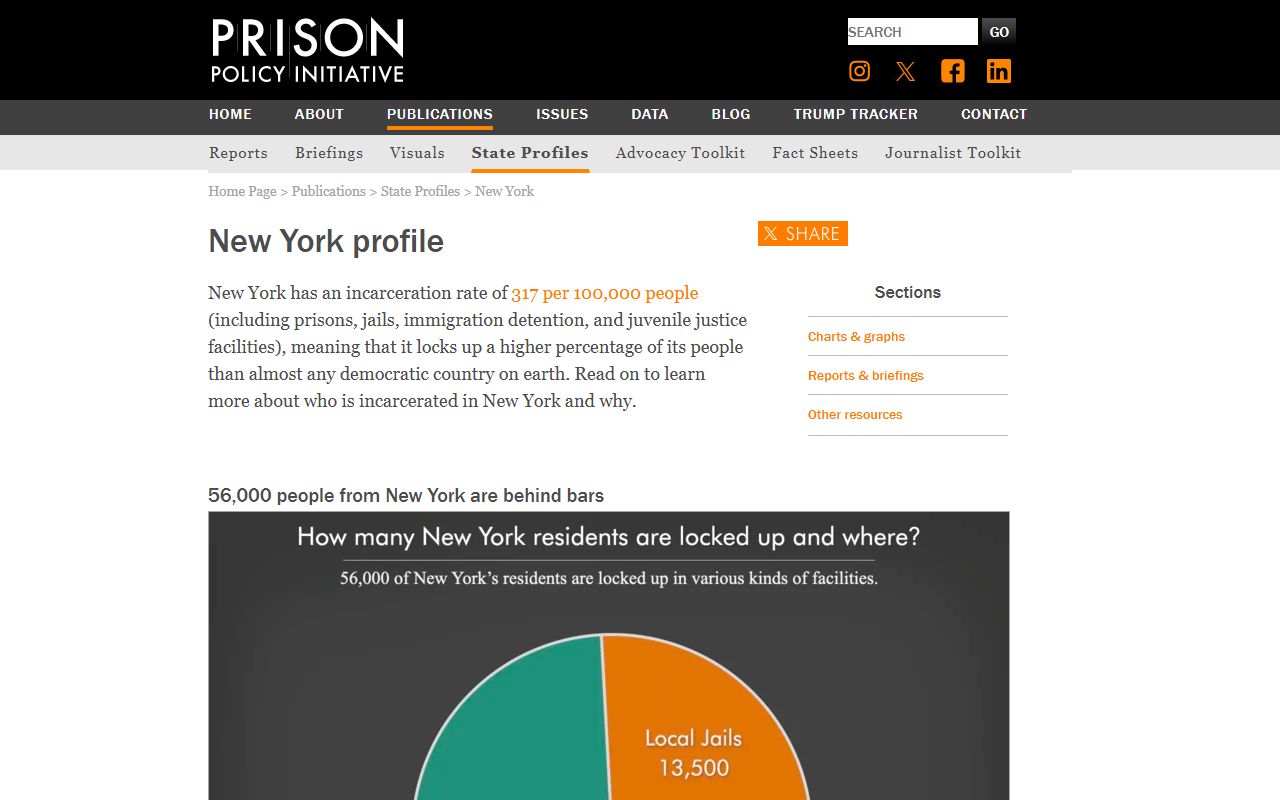
The Prison Policy Initiative New York profile sets state context for reading a single county's jail data.
Where the Data Comes From
Population data has a clear chain. The Sheriff's correction division reports custody counts. The state Commission of Correction collects and publishes those counts as official statistics. National bodies aggregate state data into wider reports. When a number is quoted, it helps to know which link in that chain it came from and what date it covers.
- Bureau of Justice Statistics: national jail and corrections data.
- Vera Institute incarceration trends: county-level jail data over time.
- Prison Policy Initiative: New York state profile.
- CourtListener: free federal and state opinion and docket resources for related case research.
Searching for Dutchess County Inmate Records by Name
This page is population data, not a name lookup. To find a specific person in custody, use the custody locator path on the Dutchess County inmate records page. That tool confirms whether someone is held now and supports release notifications. Population statistics cannot tell you about one person, and a name search cannot tell you the size of the population.