
Is There a Dutchess County Warrant List
There is no official public active-warrant search for Dutchess County. The Sheriff's Office does not post an open warrant list online. Active criminal cases and court dates can be checked in WebCriminal, but that portal is not a complete warrant database. The safe way to confirm a warrant is to contact the court that would have issued it, or to have an attorney check on a person's behalf. Court clerks can confirm a bench warrant tied to a missed appearance.
The County Clerk's Ancient Document Search holds historical arrest warrants from 1721 to the 1840s, but that is a genealogy and history tool, not a modern warrant check. It shows how long Dutchess courts have issued warrants, not who has one today.
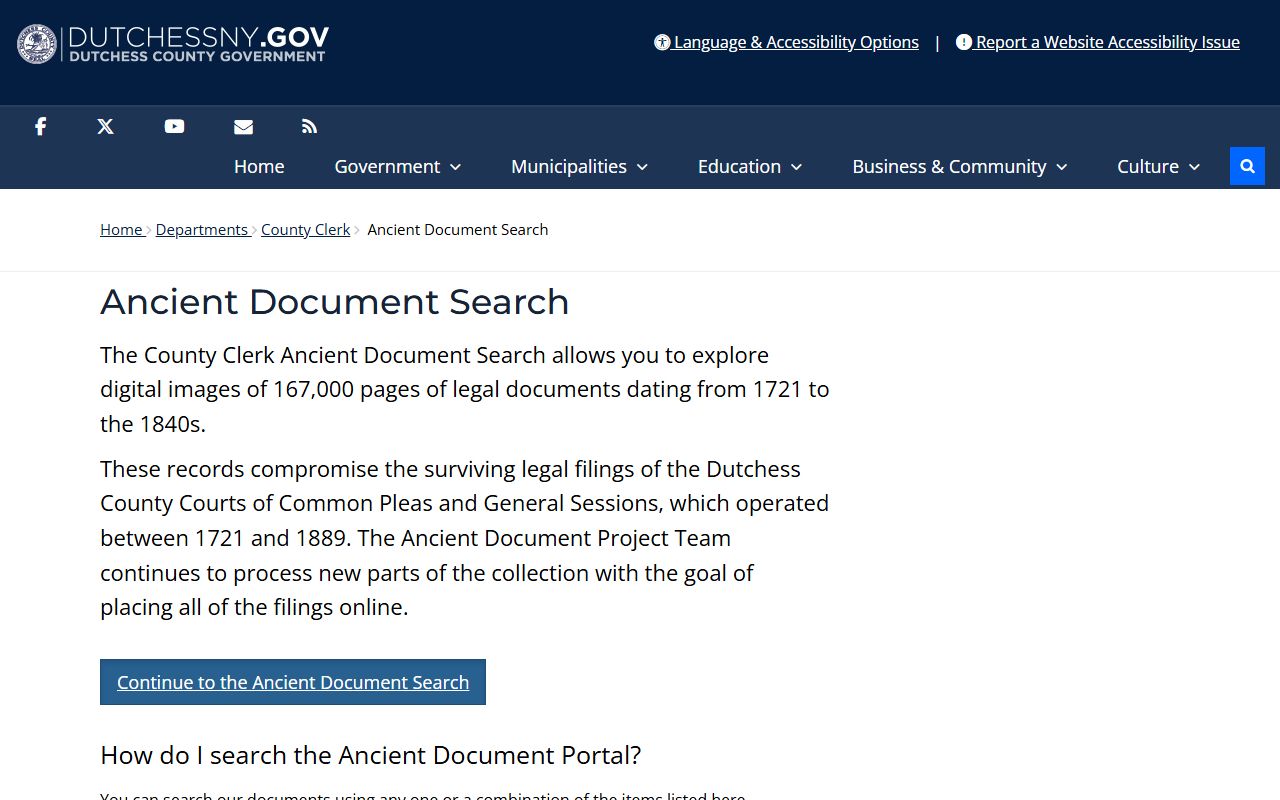
The Ancient Document Search indexes bonds, arrest warrants, and recognizances from the old Courts of Common Pleas and General Sessions. It is historical only.
Types of Warrants in Dutchess County
Warrants come in several forms. Each is issued for a different reason and by a different court or judge. Knowing the type helps a person figure out which court to call. The list below covers the warrants that appear most often in Dutchess County criminal and civil matters.
- Arrest warrant: a judge authorizes an arrest based on a criminal complaint or charge.
- Bench warrant: a court issues this after a missed court date, a probation violation, contempt, or a failure to comply.
- Search warrant: authorizes a search of a place or person; often sealed during an active investigation.
- Fugitive warrant: an out-of-county or out-of-state warrant, sometimes tied to extradition.
- Family or civil warrant: can arise from Family Court support enforcement, contempt, or civil enforcement.
Bench warrants are the most common in city and town courts. A person who misses a traffic or misdemeanor date may not even know one issued. Search warrants are different. They are tools of investigation and are usually sealed until executed. The County DA Drug Task Force, for example, executed a City of Poughkeepsie search warrant in a 2025 narcotics case.
How Warrants Affect Release From Jail
An open warrant can hold a person in custody even after bail is paid on the current charge. The Dutchess County jail is clear on this. If a person has more than one open charge, release requires bail or a release order for every charge. Active warrants from another agency can stop a release that would otherwise happen. This is why a warrant check matters before posting bail.
Bail at the Dutchess County Justice and Transition Center is accepted seven days a week, 24 hours a day, including holidays, when a court has set it. Bail can be paid in person, online, or by phone. In person it must be cash or credit card; checks are not accepted. Bonds come only through a bail bondsman, who delivers the bond to a judge and obtains a release order. The facility does not issue bonds. For the full custody path, see Dutchess County inmate records.
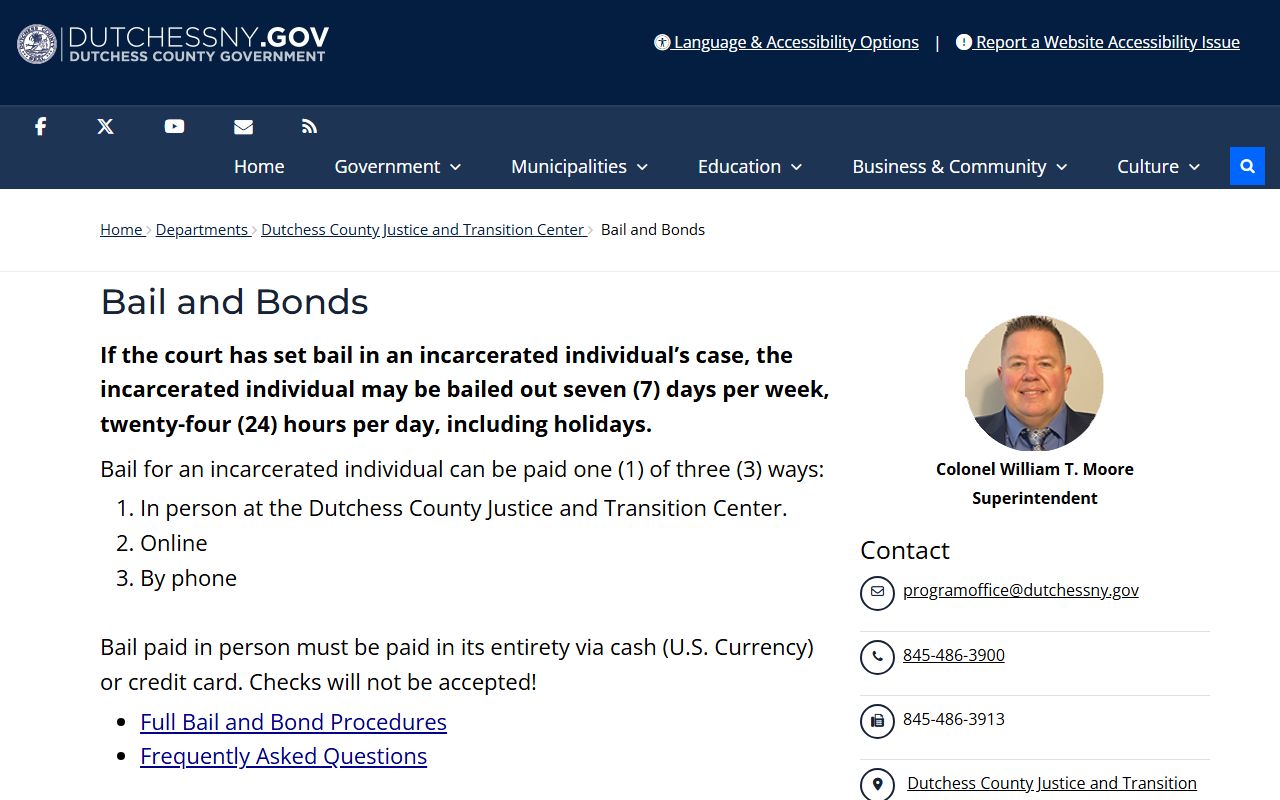
The Dutchess jail bail and bond page states that active warrants from another agency may prevent release even if bail is posted on the current charge.
How to Resolve a Dutchess County Warrant
A warrant does not go away on its own. The longer it sits, the worse the fallout, from license holds to a new arrest at a traffic stop. The steps below are the standard way to clear a warrant safely. Anyone facing a criminal matter should speak with a lawyer first.
- Identify the issuing court or agency. Use your paperwork, WebCriminal active case info, or call the city or town court.
- Do not rely on unofficial warrant websites. They are often wrong and may charge for nothing.
- Call the court clerk or your attorney to confirm the appearance or surrender process.
- If you have a lawyer, let counsel contact the District Attorney or court and ask for a calendar appearance or to vacate the warrant where possible.
- If you surrender, bring ID, your case information, any needed medication, and bail funds if your lawyer or the court advises it.
- Expect possible release delays for out-of-agency warrants, even if current bail is paid.
- After the matter is resolved, get written confirmation that the warrant was recalled, and allow time for databases to update.
Which Court Issued the Warrant
Most Dutchess bench warrants come from the court where a case sits. Felony arrest warrants tie to County Court at 10 Market Street. Misdemeanor and traffic bench warrants tie to a city or justice court. The table below lists the main courts that issue and recall warrants in Dutchess County.
| Court | Address | Phone |
|---|---|---|
| Dutchess Supreme and County Court | 10 Market Street, Poughkeepsie | 845-431-1720 |
| Dutchess Family Court | 50 Market Street, Poughkeepsie | 845-431-1850 |
| Beacon City Court | One Municipal Plaza, Beacon | 845-431-1900 |
| Poughkeepsie City Court | 62 Civic Center Plaza, Poughkeepsie | 845-483-8200 |
| Dutchess County Sheriff's Office | 108 Parker Avenue, Poughkeepsie | 845-486-3800 |
Town and village justice courts issue their own bench warrants for missed local appearances. Use the official Ninth Judicial District town and village court list to find the right court phone and address. For court-by-court detail, see the Dutchess Supreme Court page.
Family and Civil Warrants
Not every warrant is criminal. Family Court can issue a warrant in a support or contempt matter when a party fails to appear or comply. These tie to the Dutchess Family Court at 50 Market Street. Civil enforcement can also produce a body attachment or contempt warrant in limited cases. A person who gets notice of a Family Court warrant should contact the court and, if needed, the Public Defender for family representation.
The Public Defender's office at 45 Market Street represents people who qualify in criminal and family court. Intake runs weekday mornings, first come, first served. Legal Services of the Hudson Valley handles civil matters such as housing and benefits, though not criminal defense. Knowing which office fits the warrant type saves time.
Avoid Third-Party Warrant Sites
Plenty of websites claim to run a Dutchess County warrant search. Most are data brokers. They scrape stale records, mix sealed cases with active ones, and sometimes charge for a result that any court clerk would confirm for free. A warrant is a serious legal matter, and acting on bad data can make things worse.
Important: Confirm any warrant directly with the issuing court or an attorney; do not rely on third-party warrant websites for legal decisions.
The reliable sources are the court clerk, the Sheriff's Office, and your lawyer. For a related criminal case file, see Dutchess County arrest records and court records.